Aviation can give you a faster path to professional earnings than many traditional routes. The key is starting with a training plan that moves you from beginner to employable pilot with focus and consistency.
The aviation industry needs the next generation of pilots
Airlines, flight departments, and aviation employers need trained pilots as travel demand grows and older pilots retire. Boeing reports a need for 660,000 new commercial pilots by 2044.
That demand matters because your training is not just a personal goal. It can become a career path with clear milestones: private pilot, instrument rating, commercial pilot, instructor time, and then professional flying opportunities.
Command a high salary faster than many traditional careers
Aviation rewards skill, flight time, and seniority. After Commercial Pilot training, many students build hours by working as Certified Flight Instructors. The attached career model lists instructor earnings between $30,000 and $50,000 while building experience.
Once a pilot reaches the airlines, pay can move quickly. The attached model lists a starting First Officer salary of $90,000 or more, a median airline pilot salary of $226,600 per year, and senior captain earnings from $130,000 to $450,000 annually.
You start building seniority earlier. In aviation, getting into the system sooner can matter because seniority affects schedule, upgrades, and long-term earning power.
You earn while building hours. Working as an instructor can help you gain the flight time needed for the next step while earning income.
You train toward a specific outcome. Each certificate has a job-related purpose, so your progress is easier to understand.
You avoid drifting through a vague path. A clear training plan helps you know what comes next and why it matters.
How does flight school compare to a traditional four-year college? The numbers can surprise families who assume college is always the safer financial path.
Year 1
College Path
You spend before you earn
You spend $30,000 on tuition, room, and board. You have no professional earnings.
Net: -$30,000 Debt
Pilot Path
You invest in certificates
You spend about $80,000 to earn your certificates. In 12 months, you become a flight instructor and start earning $40,000 a year.
Net: -$80,000 Invested
Pilot advantage: You start your aviation career while the college student still has 3 years of study left.
Year 2
College Path
Debt keeps growing
You spend another $30,000. You might work a part-time job making $10,000.
Net: -$50,000 Debt
Pilot Path
You earn while building time
You work full time as an instructor. You earn another $40,000 while building the 1,000 plus hours you need for the airlines.
Net: -$40,000 Remaining Cost
Pilot advantage: The pilot is now $10,000 ahead of the college student.
Year 3
College Path
Still no degree yet
Junior year brings another $30,000 spent. Total debt continues to climb with no degree yet.
Net: -$80,000 Debt
Pilot Path
You reach the airlines
You reach the airlines and earn a $90,000 starting salary as a First Officer.
Net: +$50,000 Profit
Pilot advantage: The pilot is now $130,000 ahead.
Year 4
College Path
Graduation starts the job search
Senior year graduation arrives after a total cost of $120,000. The starting salary is about $65,000.
Net: -$120,000 Debt
Pilot Path
Seniority is already building
In the second year at regional airlines, salary increases to $110,000. Seniority is building fast.
Net: +$160,000 Profit
Pilot advantage: The pilot is now $280,000 ahead of the graduate.
The hidden cost is often time, not just tuition
A four-year degree can still make sense for the right person. But if your goal is to become a professional pilot, the trade-off is clear: time in school may delay income, seniority, and career momentum.
College can delay earnings
The attached model lists the average public college cost at $124,000 over four years, with many graduates carrying $32,000 to $36,000 in student debt.
Each certificate moves you toward a clear next step. You train, build hours, instruct, and work toward professional flying instead of waiting years to begin.
Your future depends on the quality of your training
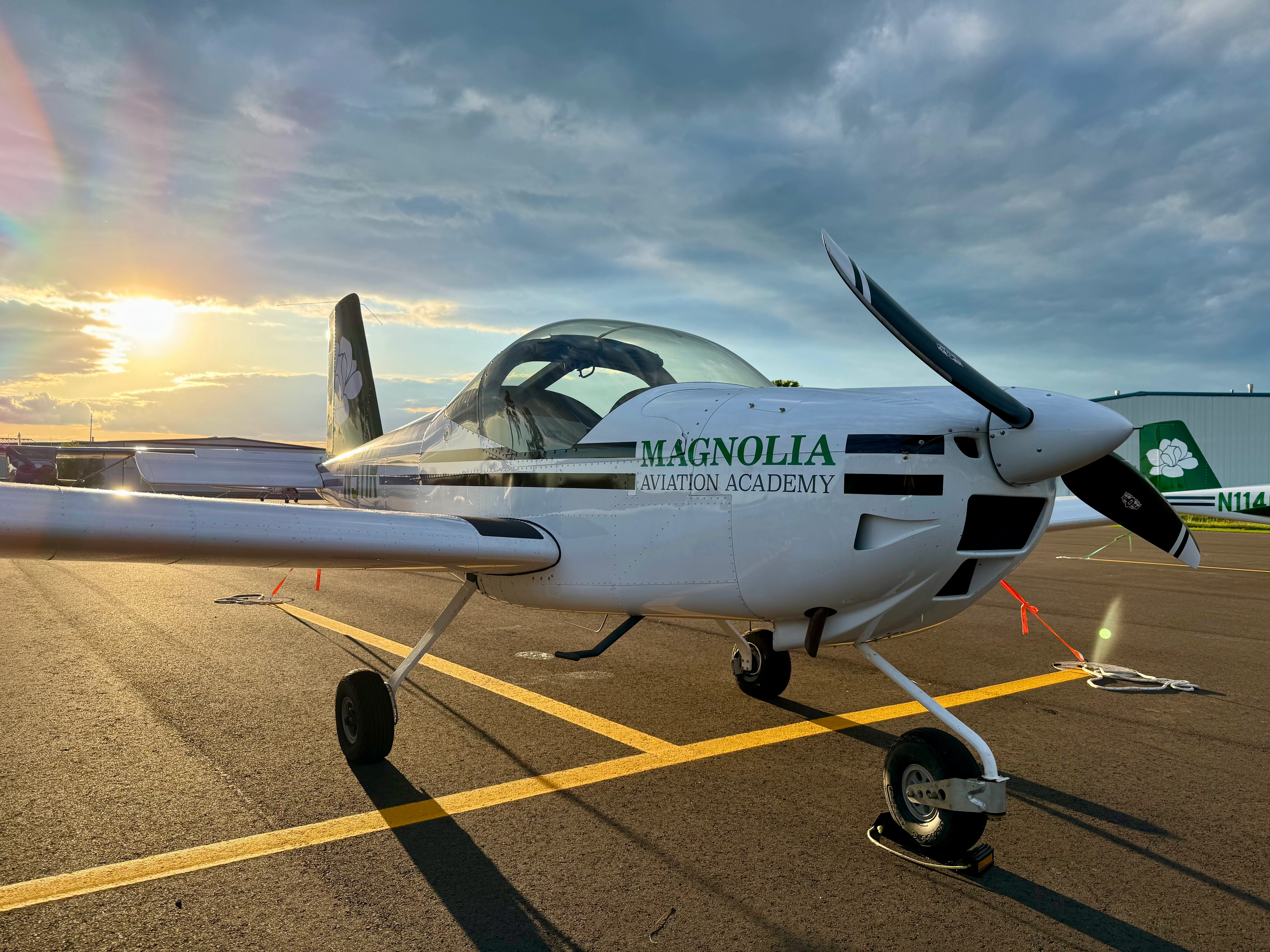
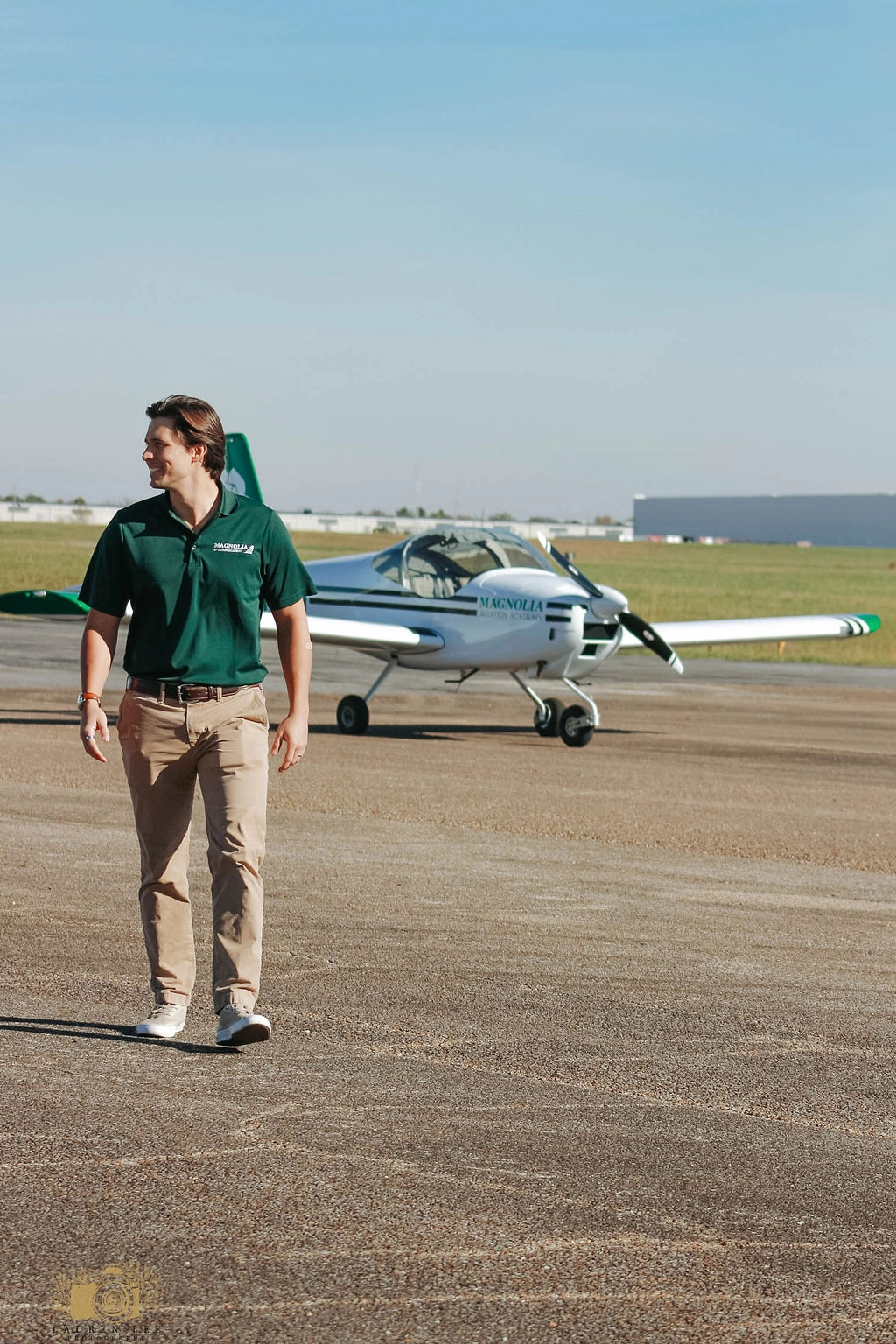
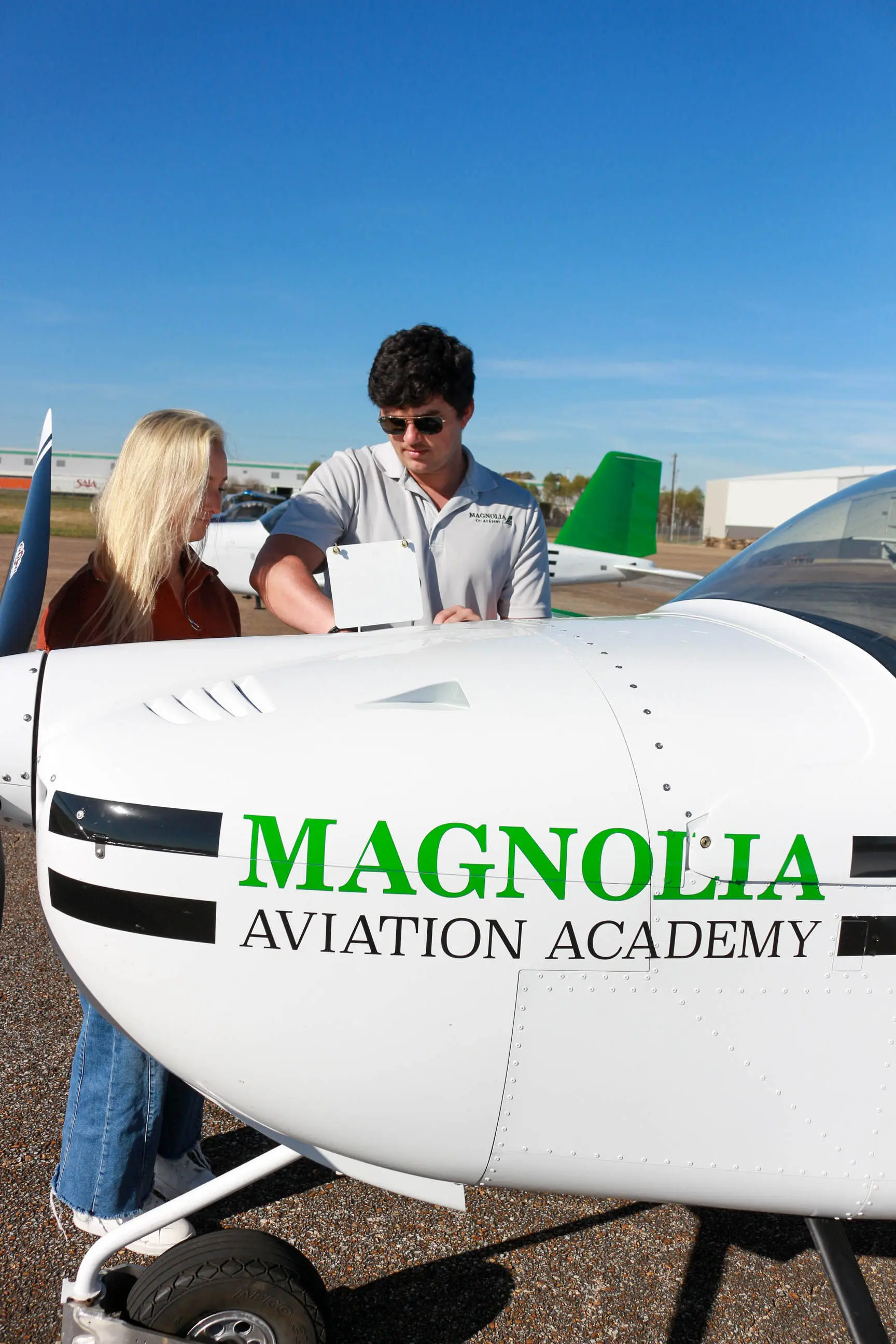
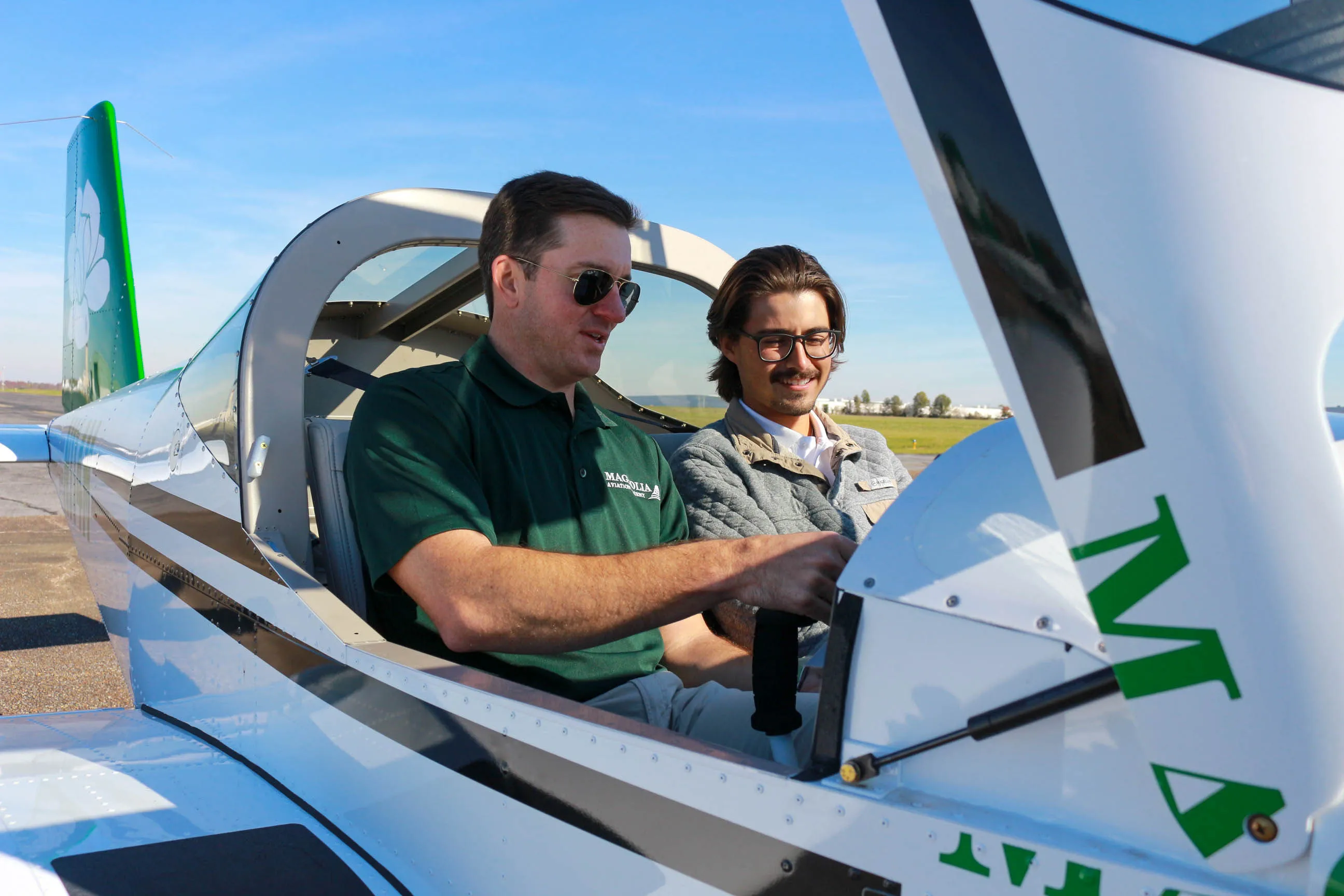
Magnolia gives you a practical path from first lesson to advanced training. You can begin with Private Pilot training, continue through Instrument and Commercial training, and build toward instructor training if your goal is a professional aviation career.
The right school should help you avoid vague promises. You need clear milestones, steady scheduling, direct support, and honest planning before you invest in the path.